
 EN
EN
 AR
AR
 BG
BG
 HR
HR
 CS
CS
 DA
DA
 NL
NL
 FI
FI
 FR
FR
 DE
DE
 EL
EL
 HI
HI
 IT
IT
 JA
JA
 KO
KO
 NO
NO
 PL
PL
 PT
PT
 RO
RO
 RU
RU
 ES
ES
 SV
SV
 CA
CA
 TL
TL
 IW
IW
 ID
ID
 LT
LT
 SR
SR
 SK
SK
 SL
SL
 UK
UK
 VI
VI
 HU
HU
 TR
TR
 AF
AF
 MS
MS
 GA
GA
 LA
LA
 MN
MN

Why do barstool chair foot pads need extra grip for smooth stone surfaces?
Smooth stone surfaces like polished marble, granite, travertine, and engineered stone have become increasingly popular in modern commercial spaces, upscale restaurants, hotel lobbies, and residential kitchens. While these surfaces offer unmatched aesthetic appeal and durability, they present a significant challenge when paired with barstool seating: inadequate friction between standard chair feet and the ultra-smooth stone finish. This friction deficit causes barstools to slide unpredictably, creating safety hazards, noise disruption, and accelerated wear on both furniture and flooring. Understanding why barstool chair foot pads require enhanced grip technology specifically for stone surfaces is essential for facility managers, interior designers, and homeowners investing in premium stone flooring.
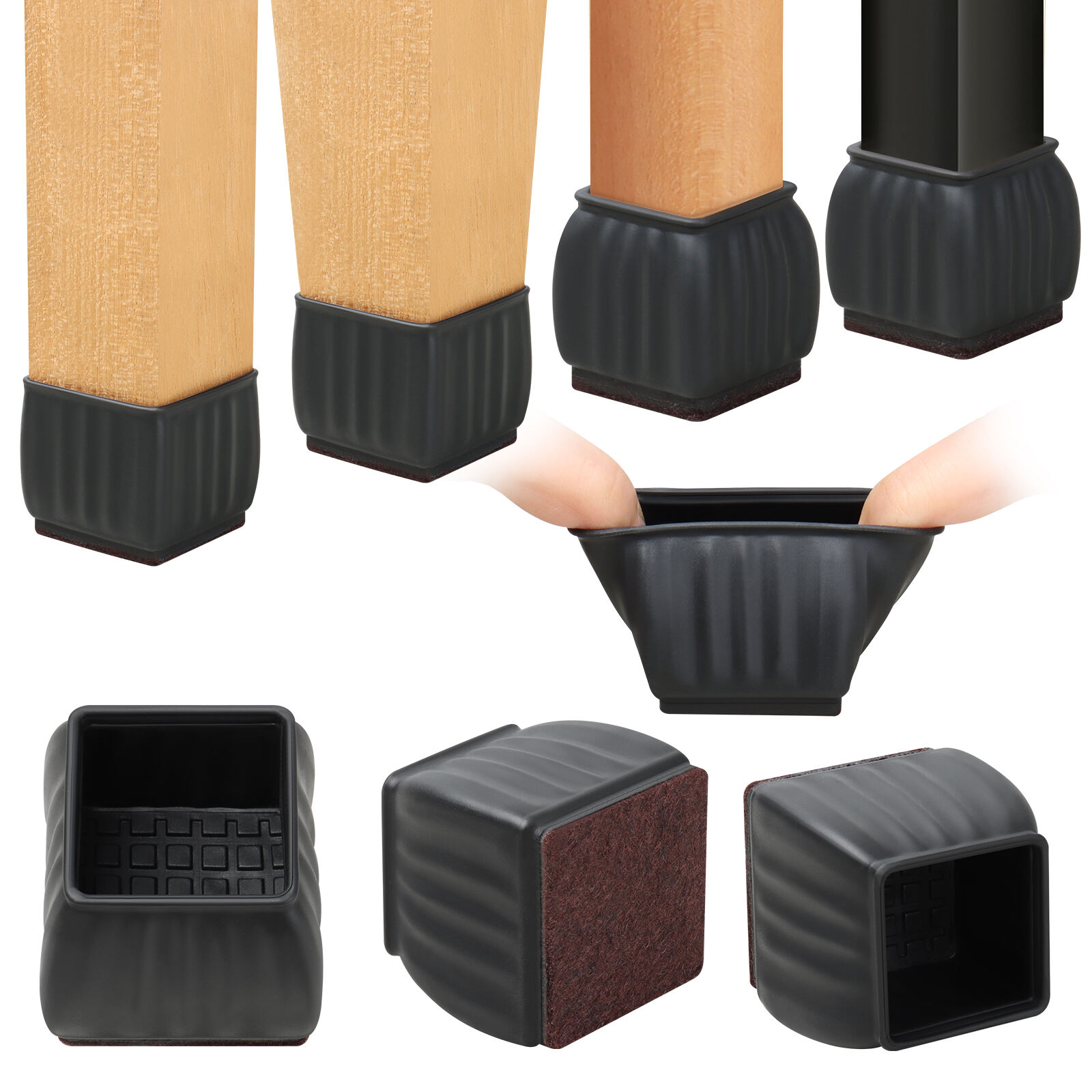
The physics of friction on stone surfaces differs fundamentally from wood, carpet, or vinyl flooring. Polished stone undergoes professional finishing processes that reduce surface roughness to microscopic levels, often achieving smoothness ratings below 0.5 micrometers. This mirror-like finish eliminates the micro-texture that normally provides mechanical interlocking between furniture feet and floor surfaces. Standard barstool chair foot pads designed for conventional flooring lack the specialized grip compounds and surface contact patterns necessary to generate sufficient static friction on these ultra-smooth materials. Without enhanced grip features, even slight lateral forces from users shifting weight or pulling themselves closer to tables can initiate uncontrolled sliding, particularly dangerous given the elevated seating position of barstools.
The Physics Behind Friction Loss on Stone Surfaces
Surface Smoothness and Contact Area Dynamics
Polished stone surfaces achieve their luxurious appearance through mechanical grinding and chemical polishing that progressively reduces surface asperity height. The coefficient of friction between two materials depends heavily on surface roughness at the microscopic level. When barstool chair foot pads contact stone flooring, the actual contact area between materials becomes dramatically reduced compared to rougher surfaces. Standard plastic or metal chair feet may only achieve 5-15% real contact area on polished granite compared to 40-60% on unsealed wood flooring. This reduction in contact area directly translates to proportional decreases in maximum static friction force, which determines resistance to initial sliding movement.
The relationship between contact pressure distribution and grip performance becomes critical for barstool applications specifically. Barstools concentrate user weight across typically four small contact points, creating pressure values often exceeding 50-80 PSI at each leg terminus. On smooth stone, this concentrated pressure can actually reduce friction coefficient through a phenomenon called pressure-induced contact elasticity reduction. Specialized barstool chair foot pads compensate by incorporating materials with specific durometer hardness ratings, typically ranging from Shore A 40 to Shore A 65, which optimize the balance between conformability to microscopic surface variations and structural stability under concentrated loads.
Material Compatibility and Surface Energy Interactions
The molecular interaction between pad materials and stone surface chemistry profoundly affects grip performance. Natural stone surfaces like granite and marble consist of crystalline silicate and carbonate structures with specific surface energy characteristics. When standard rubber or basic plastic barstool chair foot pads contact these surfaces, limited molecular adhesion occurs because the surface energy differential remains insufficient for van der Waals force activation. Advanced grip-enhanced pads utilize silicone compounds or specialized thermoplastic elastomers engineered with surface energy profiles that promote temporary molecular bonding with stone surfaces without leaving residue or causing staining.
Temperature variation in commercial and residential environments further complicates material performance on stone flooring. Stone surfaces act as thermal masses, remaining cooler than ambient air temperature during warm periods and potentially collecting condensation. This temperature differential affects the viscoelastic properties of standard pad materials, causing hardening and grip reduction. Premium barstool chair foot pads incorporate temperature-stable polymer formulations that maintain consistent friction coefficients across temperature ranges from 40°F to 100°F, ensuring reliable grip performance regardless of seasonal conditions or proximity to heating and cooling systems.
Safety Risks Specific to Barstool Applications on Stone
Elevated Fall Hazard from Increased Seating Height
Barstool seating positions users 24-30 inches above floor level for counter-height models and 28-36 inches for bar-height configurations, significantly higher than standard dining chairs. When barstool chair foot pads lack adequate grip on smooth stone surfaces, unexpected sliding during mounting, dismounting, or weight shifting creates fall scenarios with substantially greater injury potential. The Center for Disease Control reports that falls from elevated seating result in 40% more severe injuries compared to ground-level chair accidents, with complications including wrist fractures, hip injuries, and head trauma being most common. Enhanced grip foot pads reduce sliding incidents by maintaining positional stability throughout the full range of user interactions.
The dynamic loading pattern during barstool use differs markedly from standard seating. Users frequently apply asymmetric lateral forces when swiveling, reaching for items, or engaging in conversation with adjacent persons. These lateral force vectors, combined with the elevated center of gravity inherent to barstool geometry, create overturning moments that standard barstool chair foot pads cannot adequately resist on low-friction stone surfaces. Grip-enhanced pads increase the maximum lateral force threshold before sliding initiation by 200-400%, providing critical safety margins during normal use patterns that involve considerable body movement and position adjustment.
Commercial Liability and Regulatory Compliance Considerations
Restaurants, bars, hotels, and other commercial establishments face substantial liability exposure when furniture-related slip and fall incidents occur on their premises. Legal precedents increasingly hold property owners responsible for maintaining reasonably safe conditions, which explicitly includes ensuring furniture stability on the specific flooring materials present. Insurance adjusters and safety inspectors specifically evaluate whether appropriate barstool chair foot pads have been installed when smooth stone flooring is present. Failure to implement enhanced-grip solutions can constitute negligence in liability claims, potentially invalidating commercial general liability coverage and exposing business owners to uninsured loss exposure.
Building codes and accessibility standards increasingly reference furniture stability requirements, particularly in jurisdictions with strict premises liability frameworks. The Americans with Disabilities Act guidelines emphasize stable seating for individuals with mobility limitations, and interpretation guidance suggests that furniture prone to unexpected movement on installed flooring materials may violate accessibility provisions. Proactive installation of high-grip barstool chair foot pads demonstrates due diligence in safety compliance and creates documented evidence of reasonable care in premises maintenance, valuable protection in potential litigation scenarios.
Acoustic Performance and Noise Reduction Requirements
Sound Transmission Through Hard Surface Materials
Smooth stone surfaces possess exceptional acoustic reflectivity, typically exhibiting sound absorption coefficients below 0.05 across speech frequency ranges. This near-total sound reflection means that any friction-generated noise from furniture movement becomes amplified throughout interior spaces. Standard barstool chair foot pads create objectionable scraping, squeaking, and grinding sounds when dragged across polished stone, with sound pressure levels frequently exceeding 65-70 decibels at one meter distance. These noise levels prove particularly problematic in upscale dining establishments, corporate lobbies, and residential open-plan living spaces where acoustic comfort directly affects perceived quality and user satisfaction.
The frequency spectrum of furniture movement noise on stone surfaces concentrates energy in the 500-2000 Hz range, precisely the frequency band where human hearing exhibits maximum sensitivity and annoyance response. Without proper grip-enhanced barstool chair foot pads, each barstool movement generates impulse noise events that disrupt conversation, interfere with background music systems, and create acoustic fatigue among occupants. Advanced silicone and thermoplastic elastomer pad formulations absorb vibration energy at the contact interface, reducing radiated sound levels by 15-25 decibels compared to hard plastic or metal feet, effectively eliminating the acoustic signature of furniture adjustment.
Vibration Damping and Structural Noise Control
Beyond airborne sound transmission, furniture movement on stone floors generates structural vibrations that propagate through flooring systems into adjoining spaces. This structure-borne noise proves especially problematic in multi-level buildings where barstool areas exist above occupied spaces. Standard barstool chair foot pads provide minimal vibration isolation, allowing impact energy to transfer directly into stone flooring and underlying structural elements. Each barstool movement creates vibration signatures detectable in rooms below, contributing to cumulative noise complaints and potential lease disputes in commercial and residential multi-tenant properties.
Grip-enhanced barstool chair foot pads incorporate viscoelastic materials that function as vibration dampers, converting kinetic energy into heat through internal material hysteresis. This damping mechanism reduces vibration transmission by 40-60% compared to rigid plastic feet, effectively decoupling furniture movement from the flooring system. The vibration isolation performance becomes particularly critical in premium hospitality environments, high-end residential developments, and corporate spaces where acoustic privacy and comfort constitute essential quality attributes that directly influence property valuation and tenant satisfaction metrics.
Long-Term Protection for Stone Flooring Investment
Abrasion Prevention and Surface Preservation
Natural and engineered stone flooring represents a substantial capital investment, with material and installation costs ranging from $15-50 per square foot for residential applications and $25-100 per square foot for premium commercial installations. Despite stone's inherent hardness, polished surfaces remain vulnerable to abrasion damage from repeated furniture movement. Standard barstool chair foot pads constructed from hard plastics or exposed metal components act as abrasive agents, gradually scratching and dulling the polished finish through micro-cutting action. This progressive degradation necessitates expensive refinishing procedures, typically costing $8-15 per square foot, to restore original appearance and surface integrity.
The mineral composition of specific stone types influences scratch vulnerability patterns. Calcite-based stones like marble and limestone register 3-4 on the Mohs hardness scale, making them particularly susceptible to abrasion from furniture feet containing harder filler materials. Even granite, despite its superior hardness rating of 6-7, suffers surface damage when furniture movement creates concentrated stress points that exceed the local fracture toughness of individual mineral grains. Premium barstool chair foot pads utilize materials softer than all common stone types while incorporating surface contact geometries that distribute loads across larger areas, reducing peak stress concentrations below the threshold for surface damage initiation.
Chemical Staining and Residue Prevention
Certain pad materials commonly used in standard barstool chair foot pads contain plasticizers, stabilizers, or colorants that migrate onto porous stone surfaces, creating permanent discoloration. Natural stones possess varying degrees of porosity, with some limestone and travertine varieties exhibiting absorption rates exceeding 5% by weight. When incompatible pad materials maintain prolonged contact with these surfaces, chemical constituents leach into the stone matrix, producing yellow, brown, or black staining rings that penetrate beyond the reach of surface cleaning methods. These stains require invasive restoration procedures including poultice application or mechanical removal of contaminated stone layers.
Premium grip-enhanced barstool chair foot pads address this vulnerability through careful material selection and formulation control. Food-grade silicone compounds and specially stabilized thermoplastic elastomers contain no migratory plasticizers or reactive colorants that could transfer to flooring surfaces. Independent testing protocols verify non-staining performance through extended contact testing against various stone types under accelerated aging conditions. This chemical compatibility ensures that enhanced grip functionality does not compromise long-term appearance preservation, protecting both the substantial stone flooring investment and the aesthetic integrity of interior spaces.
Material Technology in Advanced Grip Solutions
Silicone Compound Engineering for Stone Applications
Modern silicone formulations represent the gold standard for barstool chair foot pads used on smooth stone surfaces, offering an optimal balance of grip performance, durability, and surface compatibility. Platinum-cure silicone systems achieve Shore A hardness values between 45-60, providing sufficient compliance to conform to microscopic surface irregularities while maintaining structural integrity under concentrated barstool loading. The molecular structure of cross-linked siloxane polymers generates inherently high friction coefficients against stone surfaces, typically ranging from 0.8-1.2 under dry conditions and 0.6-0.9 when surface moisture is present, compared to 0.3-0.5 for standard plastic feet.
The temperature stability of silicone materials proves essential for consistent performance across varied environmental conditions. Unlike conventional rubber compounds that undergo glass transition effects at temperatures below 50°F, silicone maintains elastomeric properties and friction characteristics from -40°F to 400°F. This exceptional temperature range ensures that barstool chair foot pads perform reliably in climate-controlled interior spaces, temperature-variable transitional zones, and outdoor applications with stone paving. Additionally, silicone exhibits superior resistance to UV degradation, ozone exposure, and humidity cycling, maintaining grip performance throughout extended service life without the hardening and cracking common to natural rubber alternatives.
Thermoplastic Elastomer Innovations
Advanced thermoplastic elastomer formulations offer alternative solutions for grip-enhanced barstool chair foot pads, particularly in applications requiring specific aesthetic properties or cost optimization. These materials combine the processing advantages of thermoplastics with the functional properties of elastomers through phase-separated morphology at the molecular level. Styrenic block copolymers and polyurethane-based TPEs achieve friction coefficients approaching silicone performance while offering enhanced abrasion resistance and greater design flexibility for complex geometric features like integrated mounting systems and thickness variations.
Material scientists have developed specialized TPE grades incorporating tackifying resins and friction-enhancing additives specifically optimized for stone surface interaction. These formulations utilize molecular weight distribution control and crystallinity management to fine-tune viscoelastic response characteristics. The resulting barstool chair foot pads exhibit time-dependent grip behavior, providing high initial friction to prevent sliding initiation while allowing controlled micro-movement that accommodates thermal expansion and minor settling without generating excessive stress concentrations at the floor interface. This sophisticated material response pattern enhances both safety performance and long-term durability in demanding commercial applications.
Installation and Maintenance Considerations
Proper Sizing and Fitment Protocols
The effectiveness of enhanced-grip barstool chair foot pads depends critically on proper dimensional matching between pad geometry and furniture leg profiles. Undersized pads create concentrated contact patches that reduce effective friction area and accelerate wear, while oversized pads extend beyond leg boundaries, creating tripping hazards and aesthetic inconsistencies. Professional specification requires precise measurement of leg cross-sections, accounting for manufacturing tolerances typically ranging ±0.5-1.0 mm. Square leg profiles common to contemporary barstool designs necessitate pads with internal dimensions 0.5-1.0 mm larger than nominal leg size to ensure secure interference-fit retention while accommodating dimensional variation across furniture production batches.
Installation technique significantly influences retention performance and grip effectiveness of barstool chair foot pads. Surface preparation including cleaning leg ends to remove manufacturing residues, oils, and dust particles ensures optimal adhesion when pads incorporate bonding systems. For friction-fit designs, controlled insertion force application prevents pad deformation that could compromise grip surface geometry. Many premium pad systems include depth-stop features that ensure consistent installation depth across all furniture legs, maintaining uniform floor contact pressure distribution and preventing the rocking instability that occurs when pad heights vary by more than 0.5 mm between legs of the same barstool.
Cleaning and Performance Maintenance
Grip performance of barstool chair foot pads on stone surfaces degrades progressively as contaminants accumulate on contact surfaces. Common soiling agents including kitchen oils, beverage residues, floor cleaning product buildup, and airborne particulates create interfacial films that reduce friction coefficients by 30-60%. Maintenance protocols should include periodic pad inspection and cleaning using pH-neutral detergents compatible with both pad materials and stone flooring. Silicone pads typically require cleaning every 3-6 months in commercial environments and annually in residential applications, while TPE pads may benefit from more frequent attention in high-traffic venues.
The service life of premium barstool chair foot pads on stone surfaces typically ranges from 2-5 years depending on usage intensity, environmental conditions, and material quality. Indicators for replacement include visible surface wear, grip reduction evident through increased furniture mobility, dimensional distortion from compression set, and material hardening from aging effects. Proactive replacement based on calendar schedules rather than failure-driven reactive replacement optimizes safety performance and floor protection while minimizing total lifecycle costs. Commercial facilities should maintain replacement pad inventory to ensure immediate availability, preventing extended periods of operation with compromised grip performance that increases liability exposure.
FAQ
What friction coefficient should barstool chair foot pads achieve on polished stone surfaces?
High-performance barstool chair foot pads should achieve static friction coefficients of at least 0.7-0.8 on dry polished stone surfaces and maintain values above 0.6 in the presence of typical moisture contamination. These values provide adequate safety margins for normal barstool use patterns including mounting, dismounting, and lateral weight shifting. Standard plastic or rubber feet typically achieve only 0.3-0.5 on smooth stone, insufficient for preventing unintended movement. Testing methodologies based on ASTM D1894 protocols adapted for vertical loading conditions provide objective performance verification for material selection and quality control purposes.
Can felt pads be used instead of silicone for barstools on stone floors?
Traditional felt pads prove inadequate for barstool applications on smooth stone surfaces despite their effectiveness on wood flooring. Felt materials achieve grip through mechanical fiber interlocking with surface texture, a mechanism that fails on polished stone with minimal surface roughness. Additionally, felt pads compress significantly under barstool loading, reducing effective contact area and further diminishing friction performance. Felt also absorbs moisture, creating staining potential on porous stones and complete loss of grip when wet. Silicone or advanced thermoplastic elastomer barstool chair foot pads provide necessary grip through molecular surface interaction rather than mechanical interlocking, making them the appropriate choice for stone applications.
How do enhanced grip pads affect the ability to occasionally reposition barstools?
Premium grip-enhanced barstool chair foot pads are engineered to prevent unintended sliding from normal use forces while still permitting deliberate repositioning when users apply sufficient intentional force. The friction characteristics provide directional resistance to lateral forces below approximately 15-20 pounds per leg, automatically preventing movement from typical weight shifting, but allow controlled sliding when users lift slightly or apply greater deliberate force. This functional balance maintains safety during normal seating activities while preserving reasonable furniture mobility for intentional layout adjustments. The break-away force threshold can be tailored through material durometer selection and contact area geometry to match specific application requirements in both residential and commercial environments.
Are there aesthetic options for barstool chair foot pads beyond basic black?
Modern barstool chair foot pads are available in diverse color options including black, gray, white, clear, and brown to complement various furniture finishes and interior design schemes. Clear or translucent silicone formulations provide nearly invisible protection suitable for showcasing premium furniture leg materials or maintaining minimalist aesthetic intentions. Color-matched options help pads blend with furniture finishes, reducing visual prominence while maintaining full grip and protection functionality. However, material performance should take priority over aesthetic preferences, as colorants and transparency-enhancing additives can potentially affect friction characteristics and durability. Reputable manufacturers provide technical data confirming that aesthetic variants maintain equivalent performance specifications to standard black formulations through careful material engineering and quality control protocols.


